



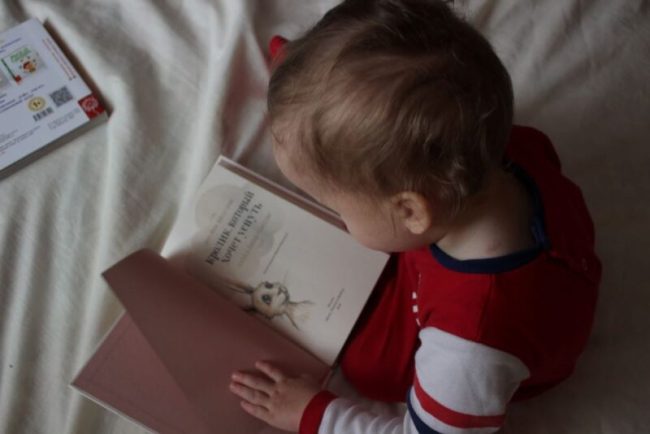
The best toddler books for little bookworms
Whether you’re looking for a gift for a little one, or just something to make bedtime run a bit more smoothly, here are some of… The post The best toddler books for little bookworms appeared first on The Daily Struggle.
Family
Newborn essentials checklist: what you actually need for your first baby
Let’s be honest, preparing for a baby can feel like wading through a mountain of “must-haves.” But what do you really need? We’ve created a… The post Newborn essentials checklist: what you actually need for your first baby appeared first on The Daily Struggle.
Family
Finding Comfort in Pregnancy: My Must Have Self-care Products
Let’s be real, the first trimester is… intense. From the moment that little line appeared on the test, my body began a whirlwind of changes.… The post Finding Comfort in Pregnancy: My Must Have Self-care Products appeared first on The Daily Struggle.
Family



What Is The Best Way To Bring Sex Toys To Your Bedroom
Most people think that sex life is simple. Sure, the act itself is simple enough, but the term sex life implies a lot of different… The post What Is The Best Way To Bring Sex Toys To Your Bedroom appeared first on The Daily Struggle.
Sex Relashionships
Most people think that sex life is simple. Sure, the act itself is simple enough, but the term sex life implies a lot of different…
The post What Is The Best Way To Bring Sex Toys To Your Bedroom appeared first on The Daily Struggle.

The best World Book Day costumes for children
World Book Day is just around the corner, with little ones across the country gearing up to celebrate their favourite authors with a whole day… The post The best World Book Day costumes for children appeared first on The Daily Struggle.
Family
World Book Day is just around the corner, with little ones across the country gearing up to celebrate their favourite authors with a whole day…
The post The best World Book Day costumes for children appeared first on The Daily Struggle.

Navigating unexplained infertility: why one woman falls into the childless 30-something statistics
The sweeping statistics released by the Office for National Statistics, revealing half of all British women are childless by the age of 30 for the… The post Navigating unexplained infertility: why one woman falls into the childless 30-something statistics appeared first on The Daily Struggle.
Family
The sweeping statistics released by the Office for National Statistics, revealing half of all British women are childless by the age of 30 for the…
The post Navigating unexplained infertility: why one woman falls into the childless 30-something statistics appeared first on The Daily Struggle.

Cuffing season: do I really fancy them or is it just cold outside?
‘Tis the season to get cuffed. Or, if you’re like me and think Cuffing Season sounds a little bit too much like gross police-themed bedroom… The post Cuffing season: do I really fancy them or is it just cold outside? appeared first on The Daily […]
Sex Relashionships
‘Tis the season to get cuffed. Or, if you’re like me and think Cuffing Season sounds a little bit too much like gross police-themed bedroom…
The post Cuffing season: do I really fancy them or is it just cold outside? appeared first on The Daily Struggle.

Single at Christmas: why so lonely?
Why does being single at Christmas feel so lonely? Our Sex and relationships editor investigates… “It’ll be lonely this Christmas” crooned the voice being piped… The post Single at Christmas: why so lonely? appeared first on The Daily Struggle.
Sex Relashionships
Why does being single at Christmas feel so lonely? Our Sex and relationships editor investigates… “It’ll be lonely this Christmas” crooned the voice being piped…
The post Single at Christmas: why so lonely? appeared first on The Daily Struggle.

A survivor’s story: Domestic Violence can happen to anyone
October is ‘Domestic Violence Awareness Month’ and here at TDS it’s an issue that’s very close to our hearts. Along with putting together a resource to help… The post A survivor’s story: Domestic Violence can happen to anyone appeared first on The Daily Struggle.
Sex Relashionships
October is ‘Domestic Violence Awareness Month’ and here at TDS it’s an issue that’s very close to our hearts. Along with putting together a resource to help…
The post A survivor’s story: Domestic Violence can happen to anyone appeared first on The Daily Struggle.

When to start potty training, and your other questions answered
Potty training is a big milestone in your little one’s life and yours. It means you are all moving into a nappy-free reality, and it… The post When to start potty training, and your other questions answered appeared first on The Daily Struggle.
Family
Potty training is a big milestone in your little one’s life and yours. It means you are all moving into a nappy-free reality, and it…
The post When to start potty training, and your other questions answered appeared first on The Daily Struggle.

Cats: Companions in Life
The following story comes from the introduction to LIFE’s special issue, Cats: Companions in Life. One morning, some years ago when I was living in New York City, I gathered Kaya into an old blue shawl and carried him eight blocks to the animal clinic […]
NatureThe following story comes from the introduction to LIFE’s special issue, Cats: Companions in Life.
One morning, some years ago when I was living in New York City, I gathered Kaya into an old blue shawl and carried him eight blocks to the animal clinic to be put to sleep. He had been my cat since I was in the ninth grade. I named him after the Bob Marley album. “Nineteen years is a long time for a domestic short hair,” the vet said, stroking him.
Kaya still had a little life in him at the end. On the walk over to the clinic he batted at my chin from inside his wrap. I talked to him matter-of-factly, telling him about a recent CNN/New York Times poll that had voted him one of the seven best cats in the Northeast. I often told him things like this over the years: my version of coochy-coochy-coo.
Kaya always tolerated the stuff about the polls, though he must have known he wasn’t all that. Not compared to his brother Korduroy, anyway. Korduroy did things you’d tell people about. He would stand in the road near the STOP sign, for example, and when a car pulled up, he’d jump on the hood and peer into the windshield. Kaya would watch this impassively, and he also looked on when Korduroy engaged in elaborate play-fighting games with the neighbor’s German shepherd. Next to Korduroy, a skilled small-game hunter who knocked on our front door by putting a paw into the mail-slot, Kaya seemed a simpleton.
He was docile and deliberate and he purred a lot. He didn’t much go for killing things but he got into sudden, spirited battles with ball-point pens and dangling extension cords. He had white mittens on his front paws, white knee-length stockings on his hind legs, and soft snowy fur around his muzzle, neck, and breast. Otherwise he was cloaked in a hodgepodge of blacks and browns. He had wide, yellow-green eyes. He lay down a lot.
Among me and my immediate family we’ve had maybe a dozen cats over the years—not including the eight kittens that once roamed my parents’ house after Palaleela had her litter—and there is no question that in matters of decency and kindness Kaya was the best of the lot. He let Korduroy eat first. He put up with two-year-olds who tugged his tail. He kept you company. Many cats are keen to human suffering, but none was keener than Kaya. When someone was sad, Kaya always came around. “Mow,” he’d say, and look up at you.
Kaya appreciated
good, simple things: being brushed with a fine comb, warm chicken scraps, a
scratch behind the ears, weekends on the Cape, a place to sleep at the foot of
the bed. How often do we celebrate the life of a cat?
Maybe it was because he didn’t know any tricks that in the last few years of his life, Kaya began to talk. He mewed incessantly. His most common issuance was a loud, plaintive wail that sounded more like a human baby than any animal I’ve heard. “Dude, you’ve got a kid over there?” friends would say during phone conversations. My professional acquaintances knew him too. I’d be interviewing someone, and when Kaya’s voice filled the phone lines I’d sense the person on the other end ignoring it uncomfortably. “I know,” I’d say to Kaya afterward, “it can be hard to be a cat.”
Kaya delivered other
sounds besides that trademark yowl. He had a two-beat high-pitched me-ow for
when he was playing happily or anticipating food. He gave a short, chirplike
mew as a greeting when he walked into a room. His long trilling mew meant he
wanted to go out. A low, guttural “reowwl” said he was encountering another
cat. An airy half-mew, half-yawn meant he was waking up, and Kaya’s odd,
unnerving series of yips told you he sensed a thunderstorm on its way. Whatever
Kaya’s agenda, the only sure way to quiet him was to take him onto your lap.
The mewing became a backdrop to my life that did not fade until the very end. When I made the appointment at the clinic, Kaya had been sick for several weeks. Thyroid condition. He slept nearly all the time and he couldn’t keep his medicine down. He stopped jumping up onto the bed at night. He kept to a corner of the apartment, venturing out every few hours to stare into his water dish and take a few half-hearted laps. When his mewing died down, a strange silence settled upon the apartment. Around that time he stopped eating.
It got to me, of course. I tried to tempt him with his favorite foods. Friends came over to tell Kaya good-bye. The night before we went to the clinic I was sitting on the couch—quiet, glum, and staring off. I guess Kaya could tell I was in a rotten way. I looked down when I felt him rubbing weakly against my shins. He peered up at me. “Mow,” he said, and then he slumped back over to the corner to rest.
The next morning I
carried him in the crook of my arm. I talked to him as if nothing were wrong.
At the clinic I set him on a table in a small greenish room and stroked him
until I could feel a faint purr in his breast. The vet was there too, and Kaya,
with what seemed like great effort, gave a final, soft meow.
His life was gentle, I tell people, and you could have learned from him.
The special issue Cats: Companions in Life is available for purchase here.

Yevgen Romanenko/Moment/Shutterstock
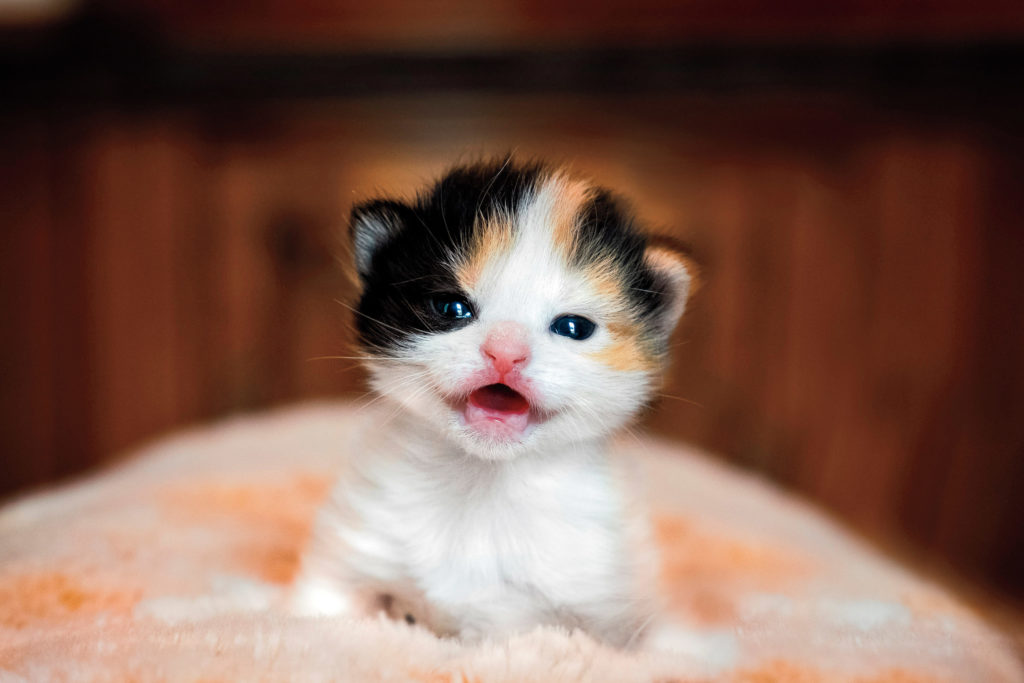
Kittens can sleep up to 20 hours a day, but this one woke all the way up to smile for the camera.
jdross75/Shutterstock

This fluffy cat was in a playful mood; feline personalities begin to emerge at around five weeks, which is when they begin to be weaned.
Evdoha_spb/Shutterstock
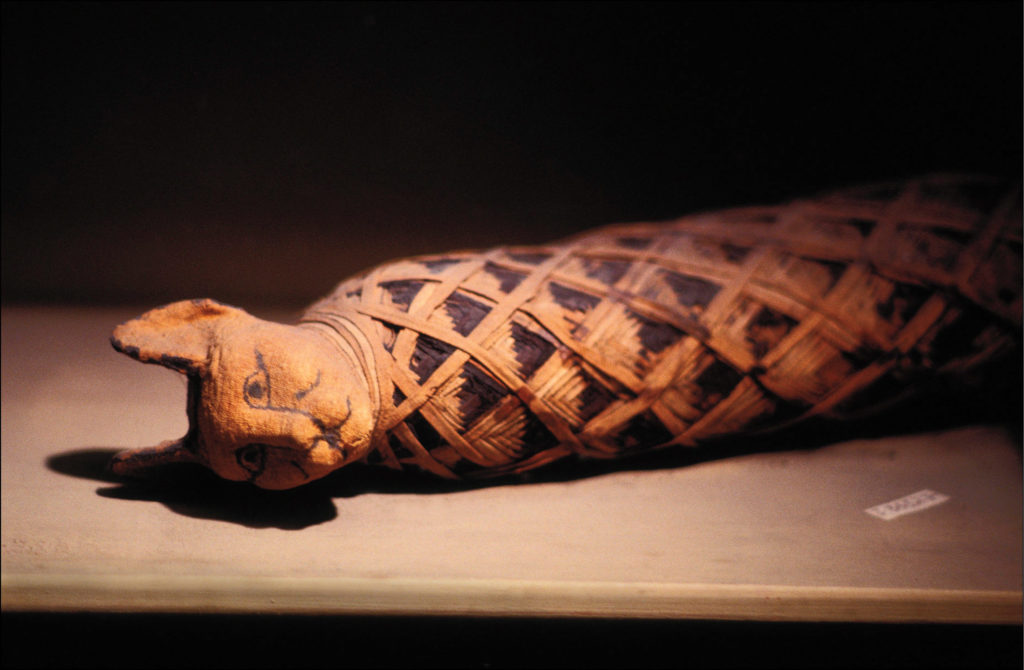
Ancient Egyptians honored cats by preserving them as mummies.
Daniel Simon/Gamma-Rapho/Shutterstock
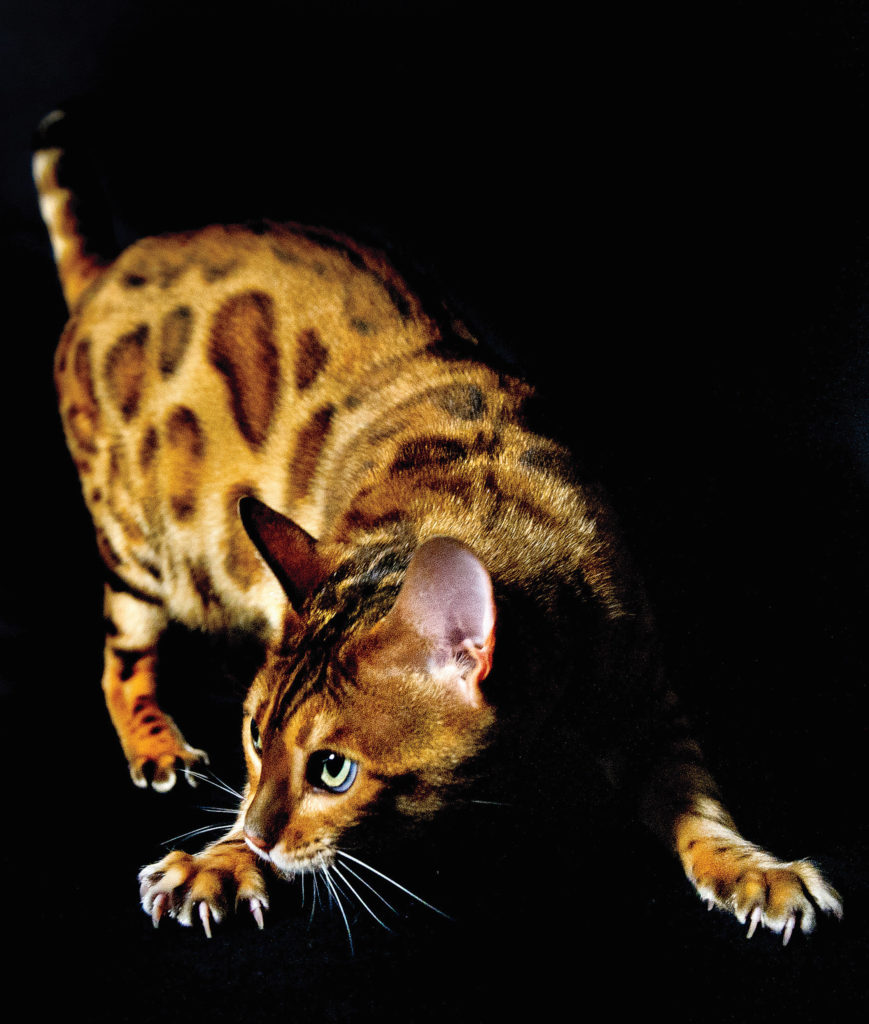
A Bengal cat named Tobysden Pyrrha posed for a studio portrait after participating in the 2018 GCCF Supreme Cat Show in Birmingham, England.
Shirlaine Forrest/WireImage/Shutterstock
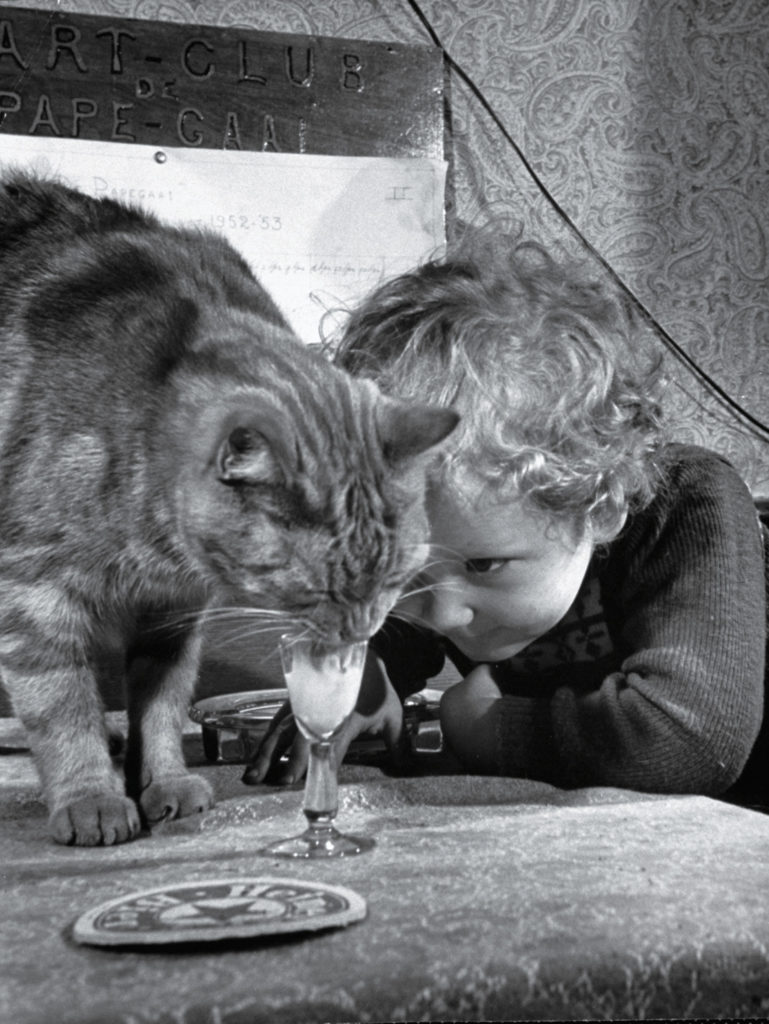
This boy, a Dutch billiards prodigy, fed cream to his cat in 1953.
Nat Farbman/The LIFE Picture Collection © Meredith Corporation
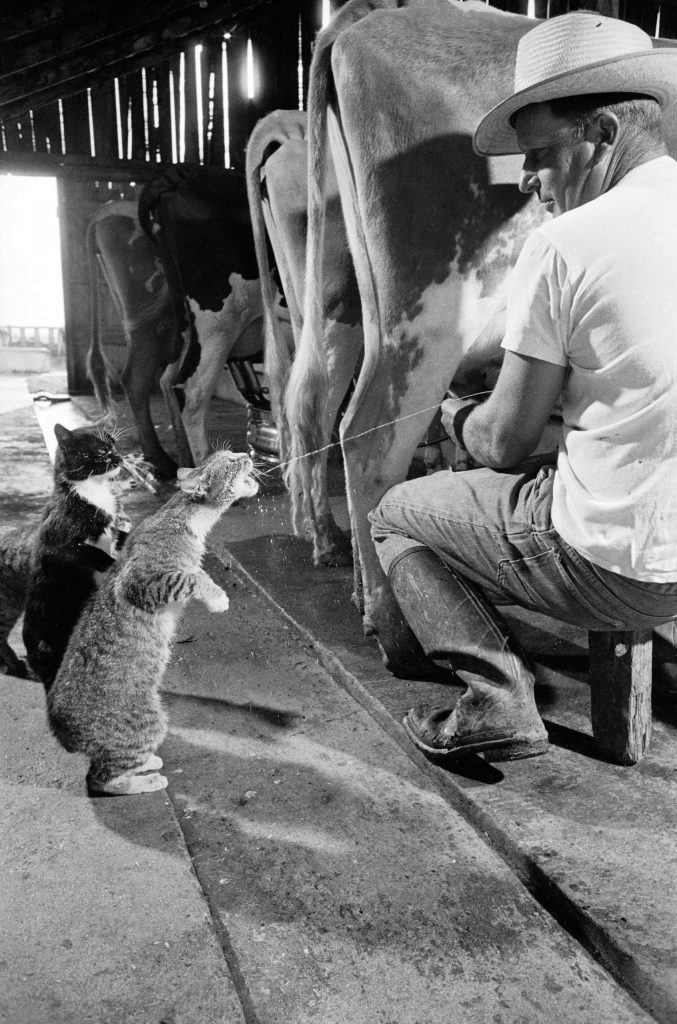
Brownie drank milk straight from the cow as Blackie waited his turn at a dairy farm in Fresno, Calif., in 1953.
Nat Farbman The LIFE Picture Collection/Shutterstock
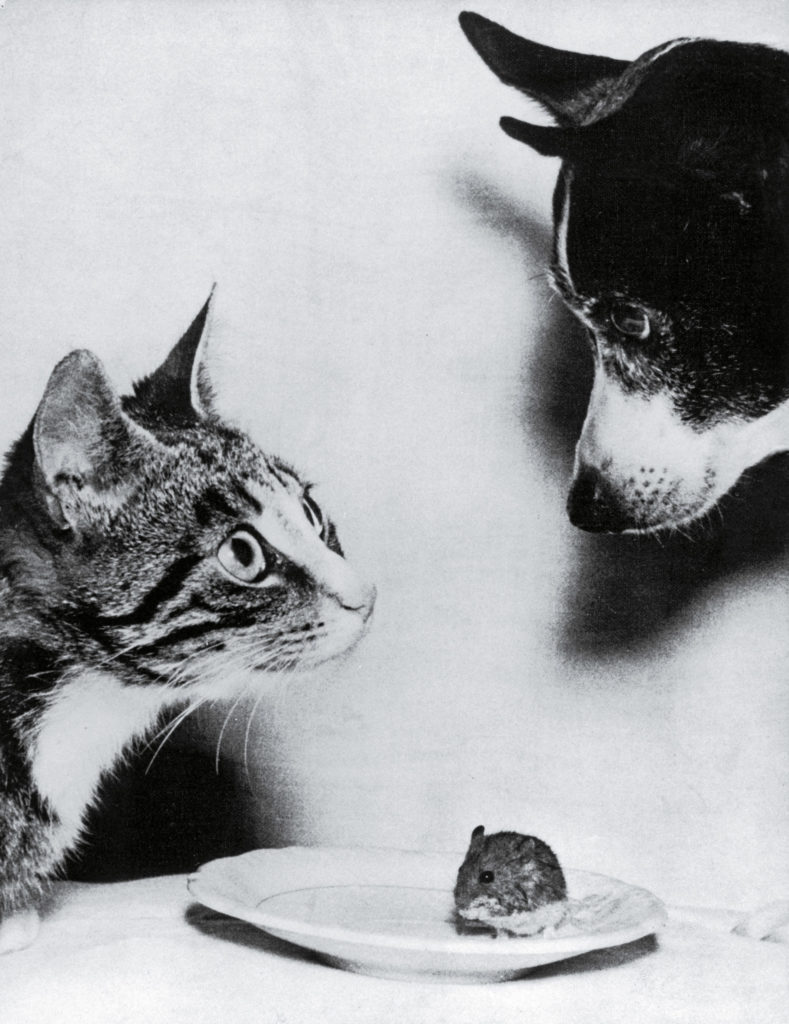
It looks like this dog, cat and mouse were considering acting out the food chain, but this was in fact a friendly gathering of the household pets of the Lyng family in Denmark, 1955.
Jytte Bjerregaard Muller/The LIFE Images Collection/Shutterstock
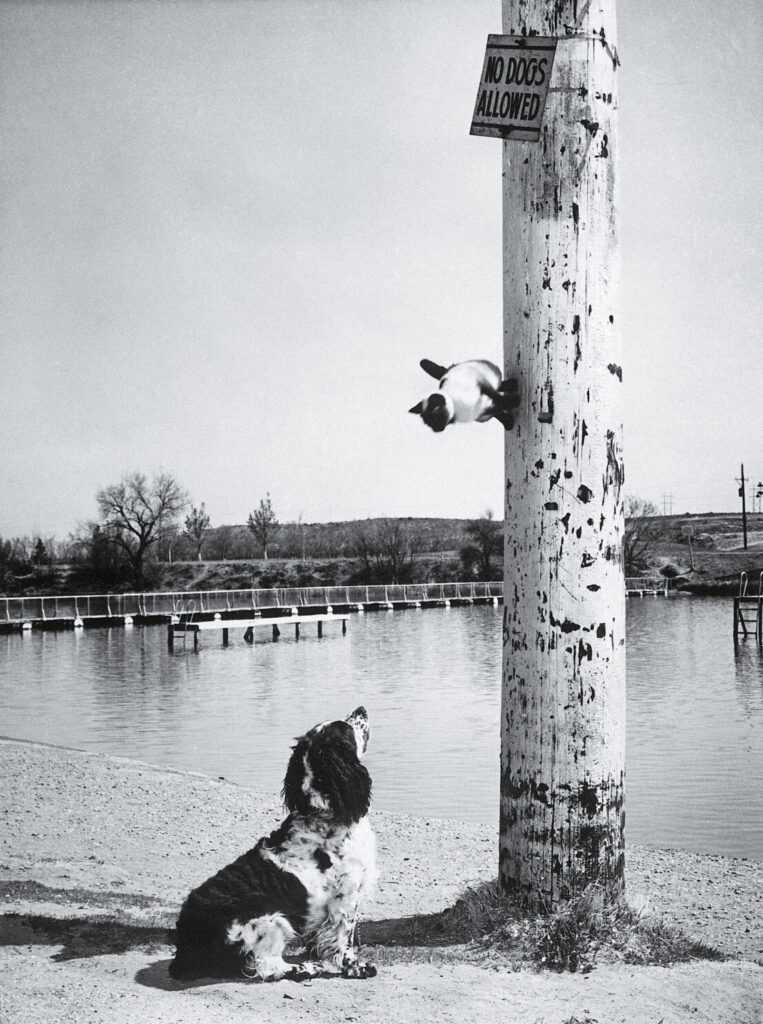
This Siamese cat escaped up a pole in Carlsbad, N.M. in 1962, and hoped the cocker spaniel in pursuit would obey the sign.
Bettmann/Shutterstock
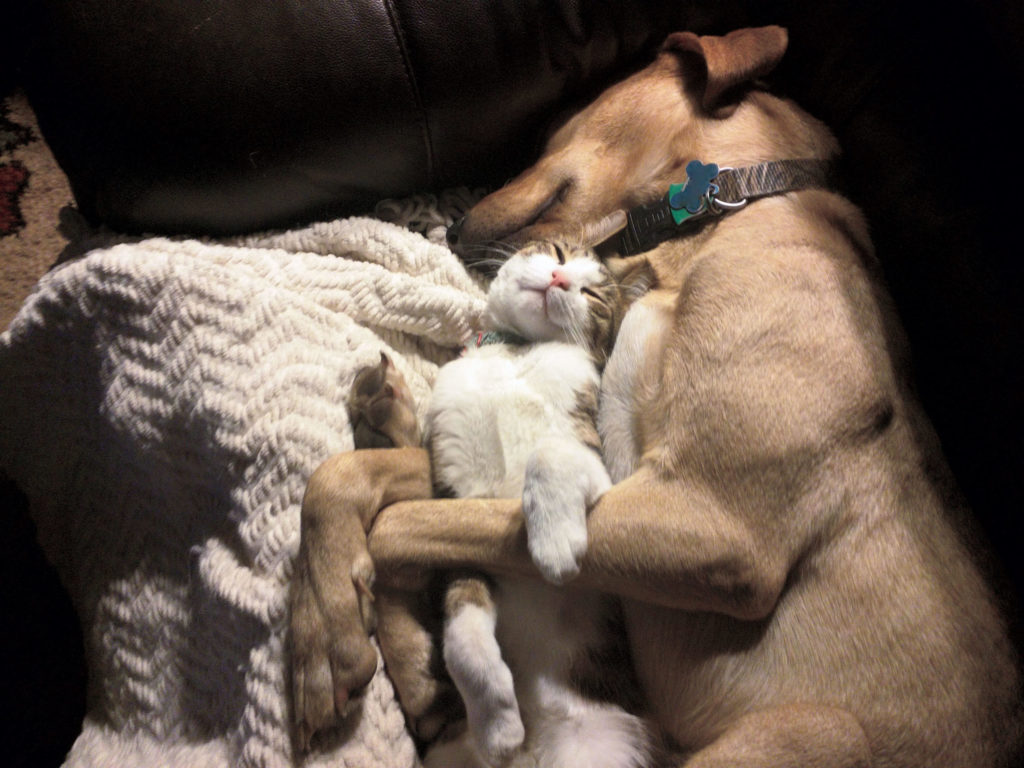
Sometimes cats and dogs do get along.
Chris Swanda/EyeEm/Shutterstock
Diana wrote in her diary at the desk in her sitting room in Kensington Palace.
DenisNata/Shutterstock
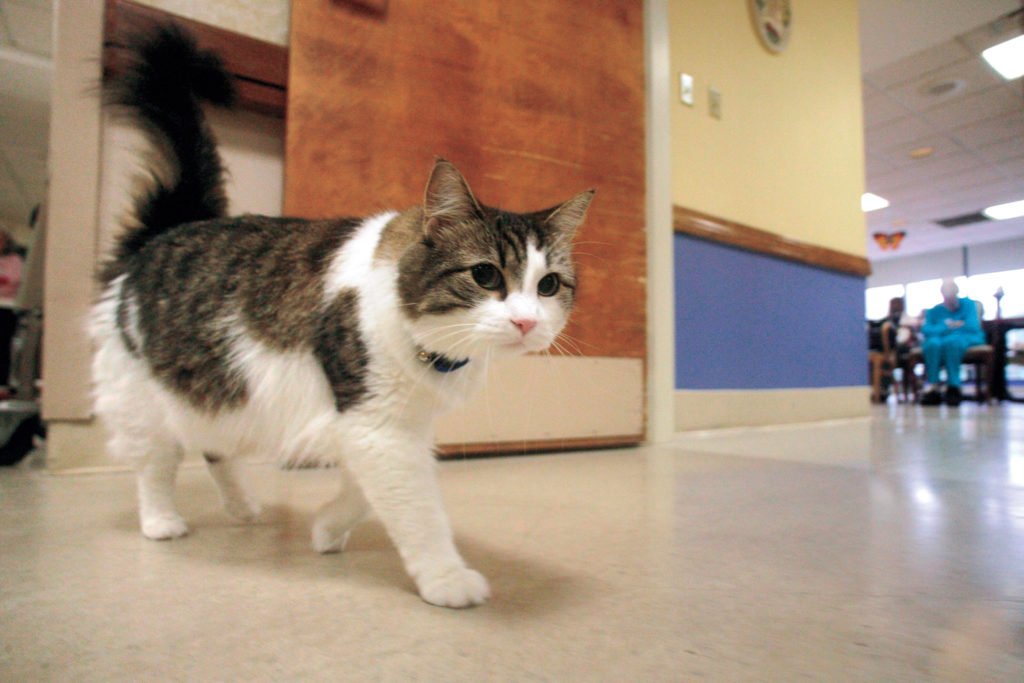
Oscar, a hospice cat, who had an uncanny knack for predicting when nursing home patients were going to die, walked past an activity room at the Steere House Nursing and Rehabilitation Center in Providence, R.I. David Dosa profiled Oscar in his 2011 book, “Making Rounds With Oscar: The Extraordinary Gift of an Ordinary Cat.
Stew Milne/AP/REX/Shutterstock
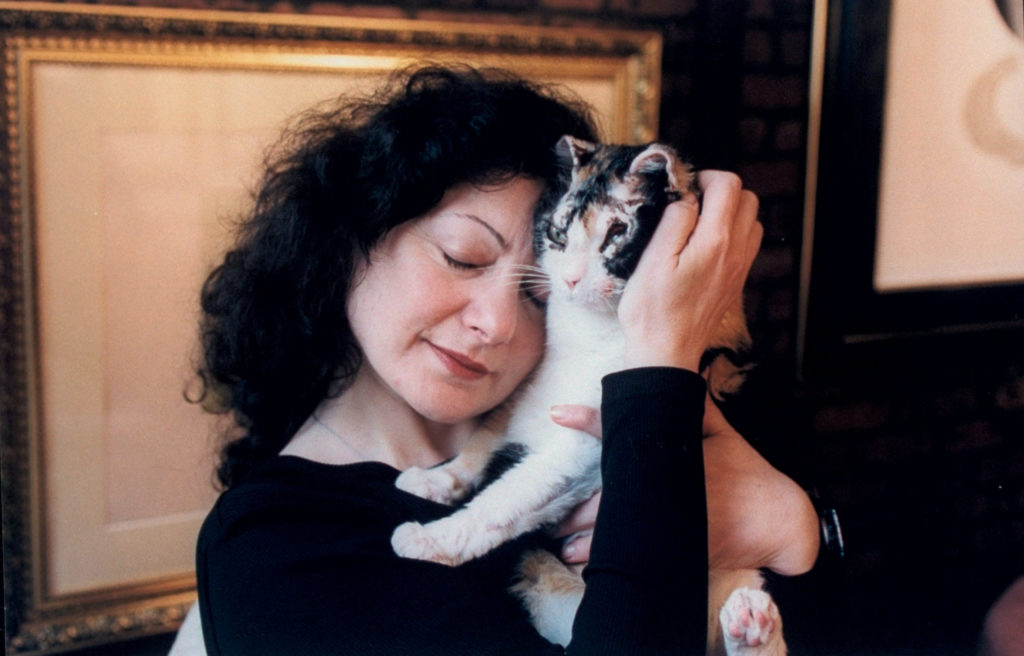
Scarlett the cat, whose eyes were singed shut after saving her kittens during a building fire, snuggled with her new owner, writer Karen Wellen in 1997; Scarlett’s eyes healed.
Taro Yamasaki/The LIFE Images Collection/Shutterstock
The post Cats: Companions in Life appeared first on LIFE.
When Maine Got Its Caribou Back
They say you can’t beat mother nature, but every now and then people give it a shot. Every now and then it works—rivers are rerouted, new crops are introduced. So in 1963, Maine figured it would try to get its caribou back. Caribou were once […]
NatureThey say you can’t beat mother nature, but every now and then people give it a shot. Every now and then it works—rivers are rerouted, new crops are introduced. So in 1963, Maine figured it would try to get its caribou back.
Caribou were once plentiful in pine tree state, during the early years of the United States, but then because of hunting and disease destroyed the population around the turn of the century.
But in 1963, Maine attempted to restore its population, by working out a trade with Newfoundland. They swung a wildlife swap. Maine sent Canada 320 grouse, and Newfoundland agreed to hand over 24 caribou. These weren’t just any 24 caribou, either. Six were males, but eighteen of group were pregnant females. With all those young ones on the way, the LIFE story about this plan sounded a hopeful note: “Maine hopes its herd will be multiplied come spring.”
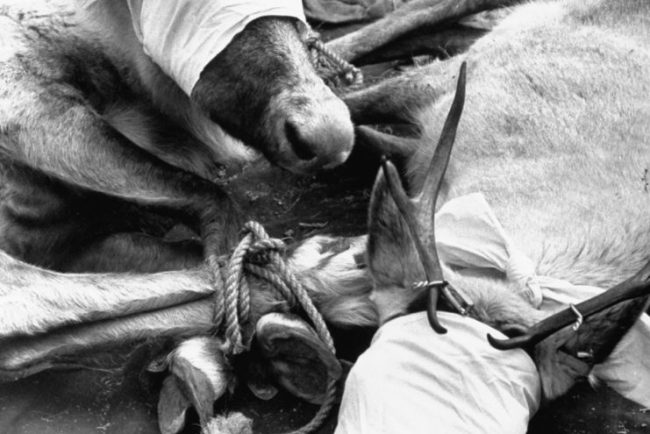
The process took some effort.
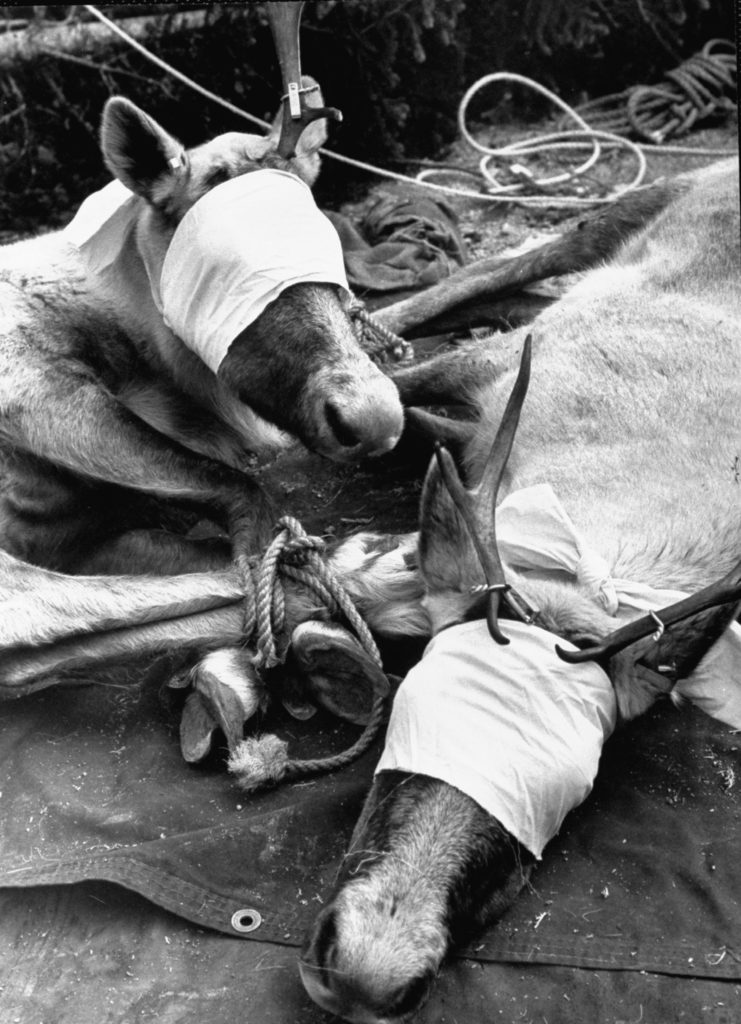
Caribou being prepared for their journey.
Photo by Fritz Goro.

Caribou being flown to Maine.
Photo by Fritz Goro.

The Caribou were brought to Mount Katahdin in Maine’s Baxter State Park.
Photo by Fritz Goro.
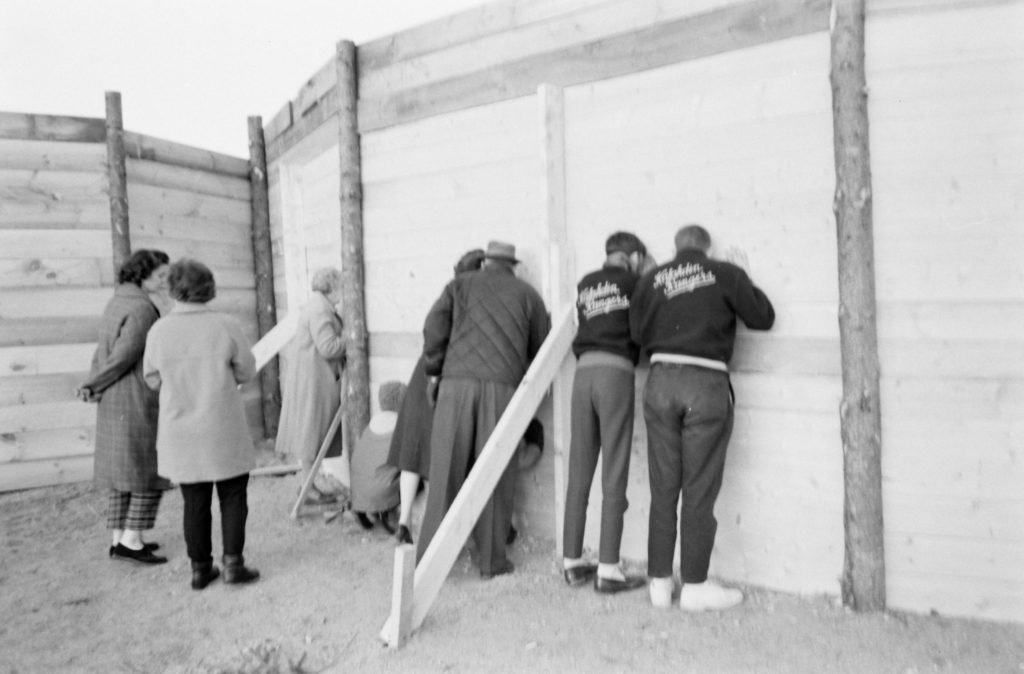
In Maine but before being released into the wild, the caribou attracted the curious.
Photo by Fritz Goro.
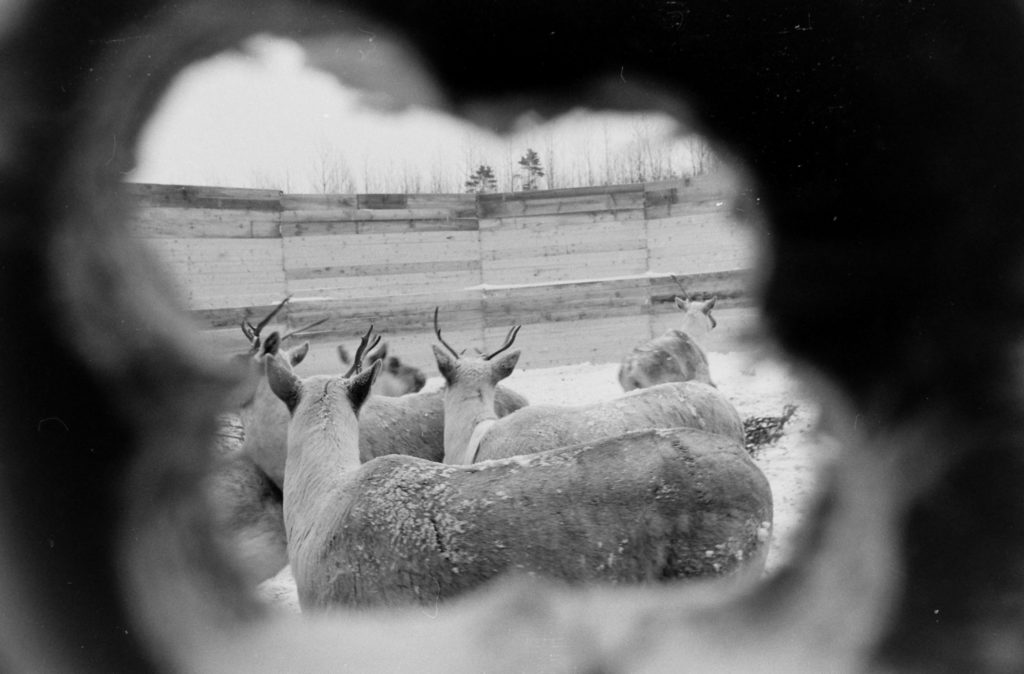
The caribou were penned before released so they could be tagged and given penicillin shots.
Photo by Fritz Goro.
Did all these effort succeed? Not really. A recent report on Maine’s state website looked back on the 1963 effort, and Matthew LaRoche, Superintendent of the Allagash Wilderness Waterway, wrote of the caribou of the class of ’63: “They dispersed after three or four years and were never seen again.” Maine again tried to bring in caribou from Newfoundland in 1993, but failed once more. The second time around the caribou—a dozen of them were this time—were fitted with radio collars, which means that the defeat was a little more detailed: “They all died or migrated out of the area.”
Caribou didn’t last in Maine, experts believe, because their habitat changed. Old growth forests had been cut down and replaced with new growth forests, and the younger trees didn’t produce the kind of lichen that are a staple of the caribou diet. Also, the whitetail deer population had increased, and those deer which carry a brainworm that doesn’t affect deer but is deadly to moose or caribou. While it is speculated that a caribou replenishment might have succeeded with a bigger initial herd—maybe closer to 100—that’s a big and expensive project. So if caribou are to come back to Maine anytime soon, no one will be buying them a ticket.
The post When Maine Got Its Caribou Back appeared first on LIFE.